Billboard’s 2026 R&B/Hip-Hop Power Players recognition puts Live Nation Urban’s culture-first live music strategy back in the spotlight, with a clear connection to the concert experiences shaping Toronto audiences.
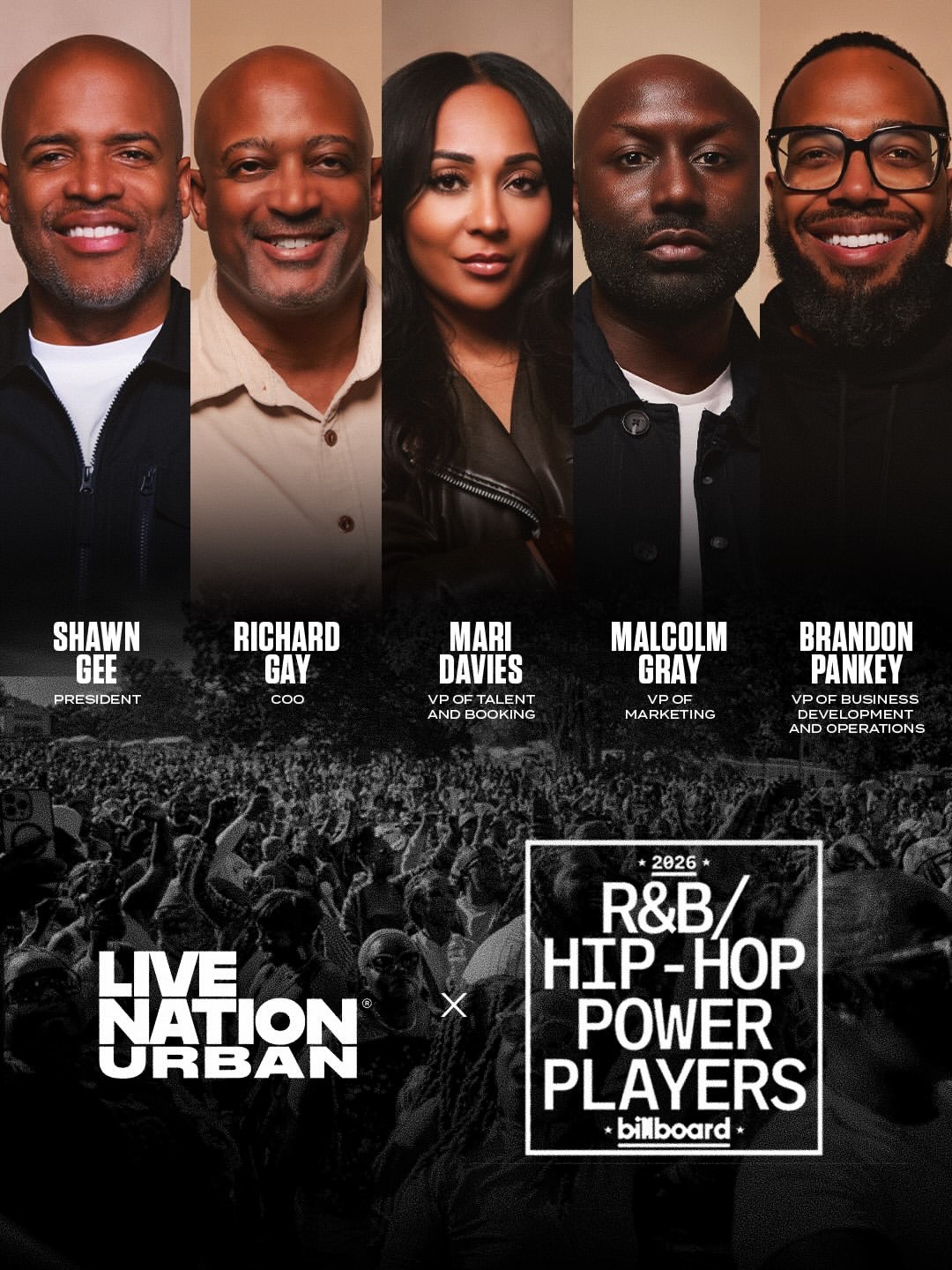
Live Nation Urban has been recognized in Billboard’s 2026 R&B/Hip-Hop Power Players coverage, putting the company’s leadership and its approach to live Black music in the industry spotlight. The recognition arrives at a moment when R&B and hip-hop touring has become more than a series of headline shows. It is also a force shaping festivals, cultural partnerships, artist development and the way audiences experience live music.
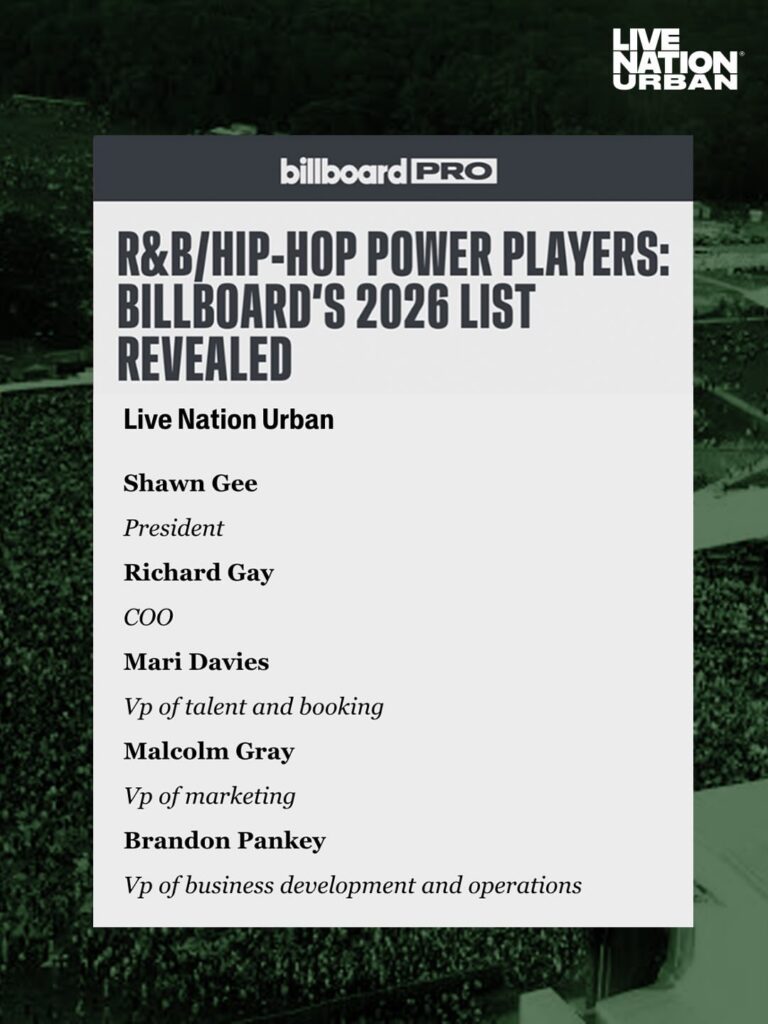
The announcement was shared by Live Nation Urban through a social post thanking Billboard for recognizing its leadership team. The post did not identify the individual honourees, so the full group recognized in the list is not confirmed in the supplied announcement. Live Nation Urban’s official team page does, however, identify Shawn Gee as president, Richard Gay as chief operating officer, Brandon Pankey as vice-president of business development, Mari Davies as vice-president of booking and talent relations, and Malcolm Gray as vice-president of marketing. ([livenationurban.com](
For Toronto fans, the news matters because the business behind major R&B and hip-hop shows increasingly shapes what reaches Canadian stages. The recognition also lands during one of the biggest periods in Toronto’s live music growth, with major venues, stadiums and festivals expanding the city’s capacity to host global artists. Billboard Canada’s own 2026 coverage described Toronto as a major touring hub, while Live Nation Canada executives ranked at the top of that national Power Players list. ([ca.billboard.com](
What the Live Nation Urban Billboard 2026 R&B/Hip-Hop Power Players recognition signals
Live Nation Urban was created through a partnership between Live Nation Entertainment and Shawn Gee, with a specific focus on hip-hop, R&B and gospel. According to the company, its work includes building platforms, events and festivals globally, then developing content strategies around those live properties. ([livenationurban.com](
That model helps explain why the Billboard recognition is significant. Live Nation Urban is not positioned simply as a promoter that places artists into venues. Its stated mission covers the larger ecosystem around a show: the booking, the audience, the cultural setting, the partnerships and the long-term value of an event brand.
That distinction matters in R&B and hip-hop. The strongest touring concepts in these genres often depend on chemistry between artists, shared history and a sense of occasion. A bill can function as a concert, a reunion, a festival and a cultural gathering at the same time. When that approach works, it gives audiences a reason to see the experience as more than a standard stop on a tour route.
Billboard’s 2026 list was selected by the publication’s editorial team and recognizes leaders working across areas including labels, management, streaming, publishing, finance and live entertainment. Billboard’s public description of the list says it highlights executives leading both genres across multiple parts of the music business. ([cnb.com](
Why the recognition matters beyond one company
The Live Nation Urban Billboard 2026 R&B/Hip-Hop Power Players recognition reflects a broader shift in how the industry measures influence. Artist success is still tied to recordings and streaming, but live music now plays a central role in building identity, deepening fan relationships and creating new business opportunities.
For established acts, carefully built live packages can bring different generations into the same room. For emerging artists, the right tour or festival slot can introduce them to an audience that may not yet know their work. For promoters, a strong cultural point of view can create an event that stands apart in an increasingly crowded calendar.
Live Nation Urban’s official description emphasizes its focus on emerging, established and classic hip-hop, R&B and gospel artists. That range is important. It suggests a strategy that does not treat the genres as a single sound or audience. Instead, it creates room for current performers, legacy acts and artists who sit between traditional genre categories. ([livenationurban.com](
The company’s leadership structure also points to how complex modern touring has become. Booking and talent relations sit alongside marketing, business development, finance and operations. Each area affects the final audience experience, from the artists selected for a bill to the way a show is positioned and promoted.
Toronto’s place in the wider live R&B and hip-hop economy
Toronto is not identified in the supplied Live Nation Urban announcement as the location of the recognition or as a specific market connected to the honour. The local relevance comes from the city’s position within the wider North American touring network.
Billboard Canada’s 2026 Power Players coverage reported that Live Nation Canada commanded 3,600 events across the country over the previous year, reaching more than 10 million fans. The same coverage highlighted the growth of Toronto venues, including RBC Amphitheatre and the launch of Rogers Stadium. ([ca.billboard.com](
Those figures describe Live Nation Canada, not Live Nation Urban, and the two should not be treated as the same operation. Still, they show the scale of the live market in which Toronto audiences now participate. Artists and promoters can use the city for arena shows, stadium dates, festival appearances, club performances and multi-artist events. That range gives genre-focused touring brands more options when building a Canadian strategy.
Toronto’s audience also brings a distinct connection to R&B and hip-hop. The city has a strong local artist community, an international population and a long history of supporting both North American stars and homegrown performers. That mix makes the GTA an important test for any live concept built around cultural credibility. A show has to feel relevant to local fans while still carrying enough scale to attract major touring acts.
The people behind Live Nation Urban’s culture-first approach
Shawn Gee remains the most visible name associated with Live Nation Urban. The company’s official team page lists him as president and identifies the executives responsible for operations, business development, booking, marketing and finance. ([livenationurban.com](
That division of responsibility offers a useful picture of the company’s work. A culture-led concert brand needs strong artist relationships, but it also needs the infrastructure to operate across markets. It needs marketers who understand the audience, business leaders who can build partnerships and operations staff who can deliver a consistent experience.
In other words, the recognition is not only about who gets a name on a list. It reflects the growing importance of the teams that shape how R&B and hip-hop move through the live industry. The artists remain the centre of the experience, but the systems around them determine which ideas become tours, festivals and recurring platforms.
That is especially true as major promoters compete for audience attention. Toronto’s packed entertainment calendar includes concerts, festivals, sports, nightlife and cultural events. A genre-specific live brand must offer a clear reason for fans to choose it over another night out. The strongest answer is often a thoughtful lineup and a format that respects the music’s history while leaving space for new talent.
What Toronto fans should watch next
The Live Nation Urban Billboard 2026 R&B/Hip-Hop Power Players recognition does not announce a new Toronto concert, festival or local partnership. It should not be read as confirmation of an upcoming GTA event.
What it does provide is a snapshot of where the live music business is placing influence. R&B and hip-hop continue to drive major touring conversations, but the most interesting developments are often found in the structure around the performance: artist pairings, festival identities, strategic partnerships and platforms that can return year after year.
For Toronto audiences, that could mean more genre-focused bills, more cross-generational lineups and more events designed around the culture surrounding the music. The city’s growing venue network gives promoters room to experiment, from intimate rooms to large outdoor stages.
Live Nation Urban’s Billboard recognition is therefore best understood as an industry signal rather than a local event announcement. It acknowledges a team working to build live music around hip-hop, R&B and gospel, while Toronto remains one of the markets closely watching how that strategy develops. The next meaningful measure will be what those ideas create for audiences: which artists share a stage, which communities gather and which live experiences stay with fans after the lights go down.
Thank you for reading. This article is complete. Read more articles here | TalkofToronto.ca