More releases are falling below retail as supply rises, scarcity fades and Toronto buyers face a very different sneaker market.

The sneaker resale business once ran on a simple formula: buy a limited pair, wait for demand to rise, then sell above retail. In 2026, that formula looks far less reliable.
More releases are sitting. Resale premiums are shrinking. Shops and independent sellers are being left with boxes that tie up cash instead of generating it. For Toronto sneaker buyers, the shift could mean less pressure to pay inflated prices—and more reason to compare before buying.
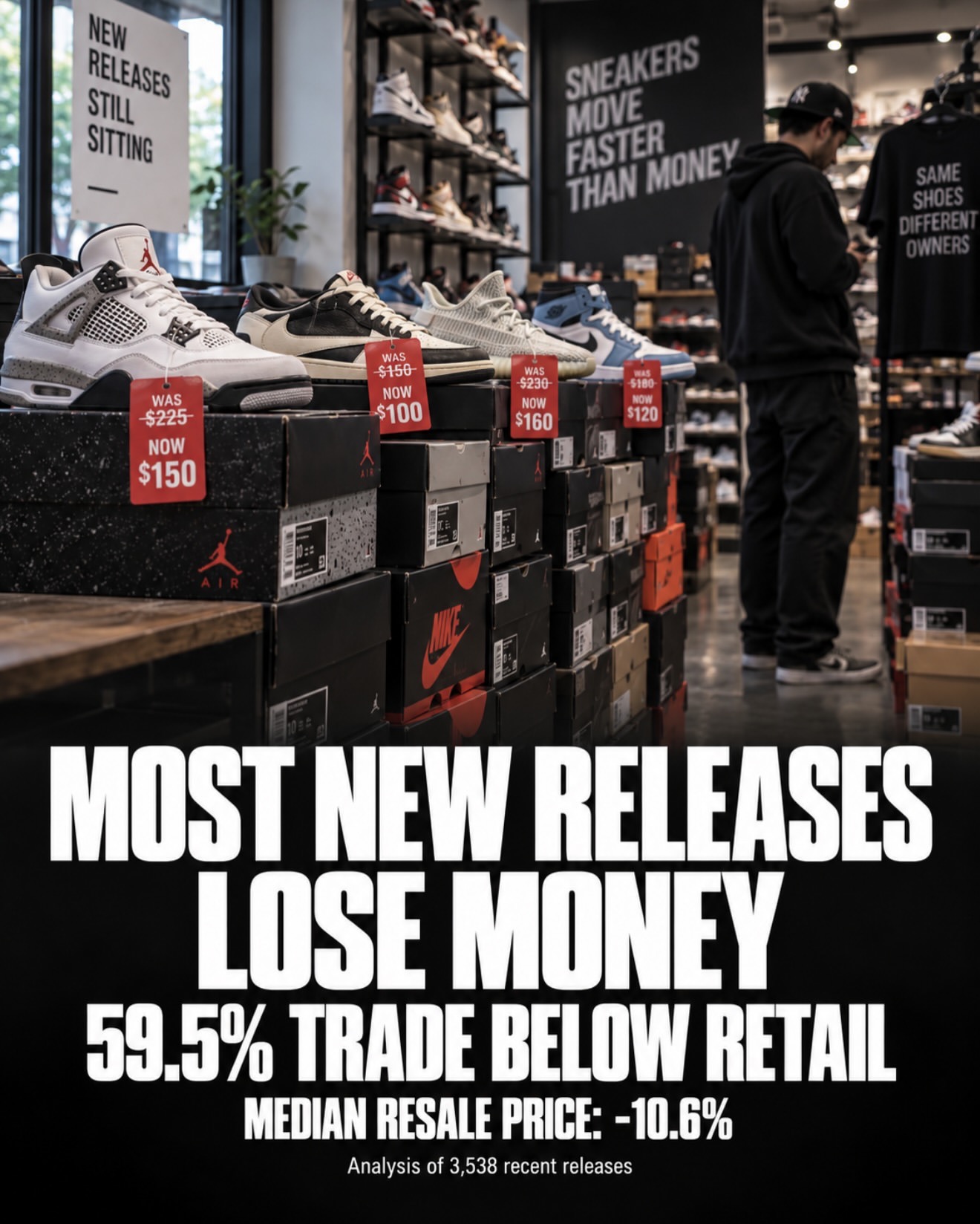
Figures presented in a recent-release analysis show how sharply the market has changed. Of 3,538 releases reviewed, 59.5 per cent traded below retail. The median resale price change was listed at negative 10.6 per cent.
The analysis does not identify a data provider or methodology, so the figures should be read as an indication of the market’s direction rather than a complete picture. Even so, the trend is clear in the central question facing sellers: what happens when hype no longer guarantees profit?
Jordan releases are not automatically holding value
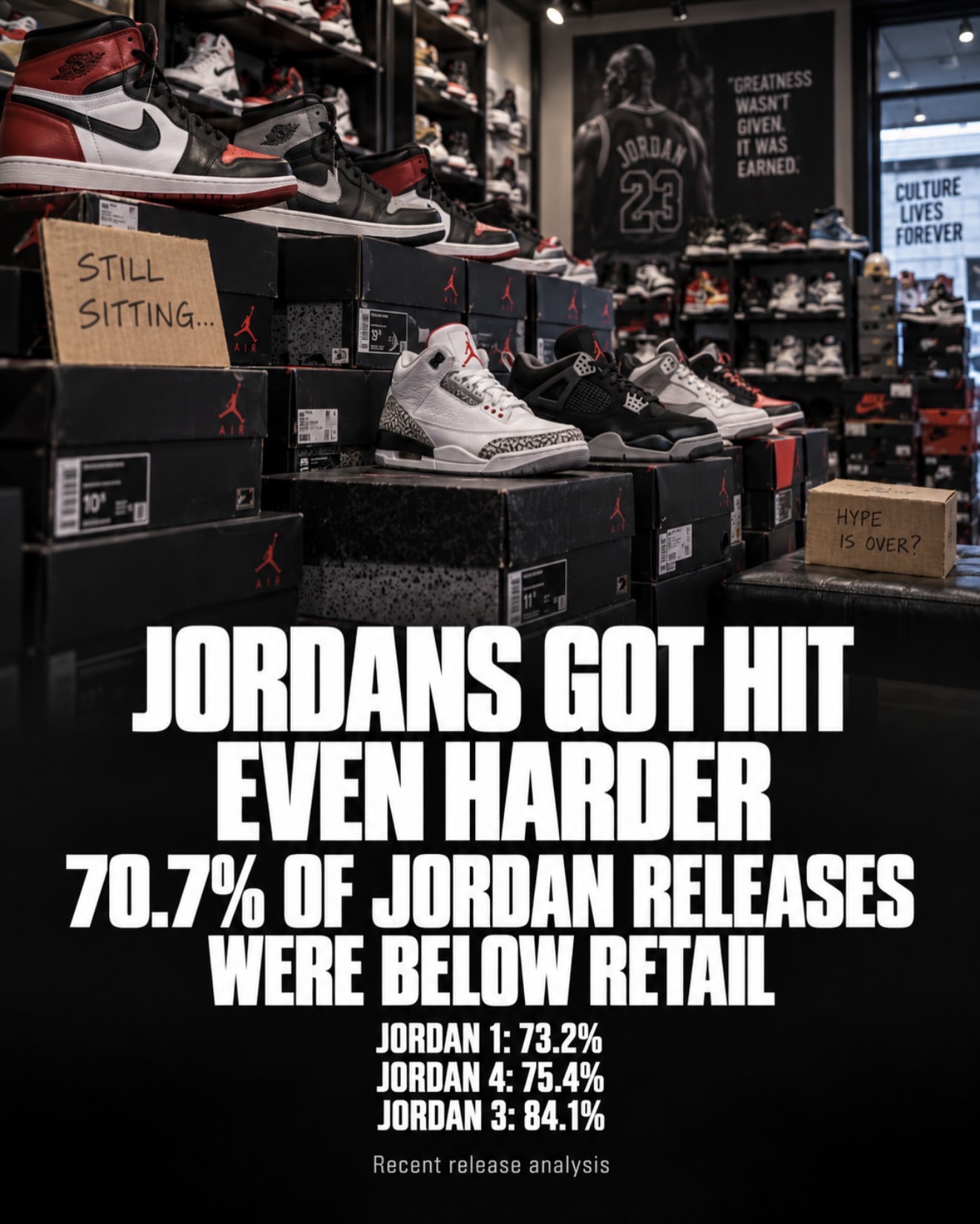
The pressure appears especially strong across several major Jordan lines. The analysis reported that 70.7 per cent of recent Jordan releases traded below retail.
By model, the figures were higher still: 73.2 per cent for the Air Jordan 1, 75.4 per cent for the Air Jordan 4 and 84.1 per cent for the Air Jordan 3.
Those numbers do not mean every pair is losing value. They do suggest that a famous silhouette and a history of strong demand are no longer enough to protect most new releases from falling below retail.
Jordans, Dunks and Yeezys helped turn sneaker collecting into a financial strategy. A shoe could be worn, displayed or held as an asset. Now, for many releases, retail may be the ceiling rather than the starting point.
More supply has weakened the scarcity premium
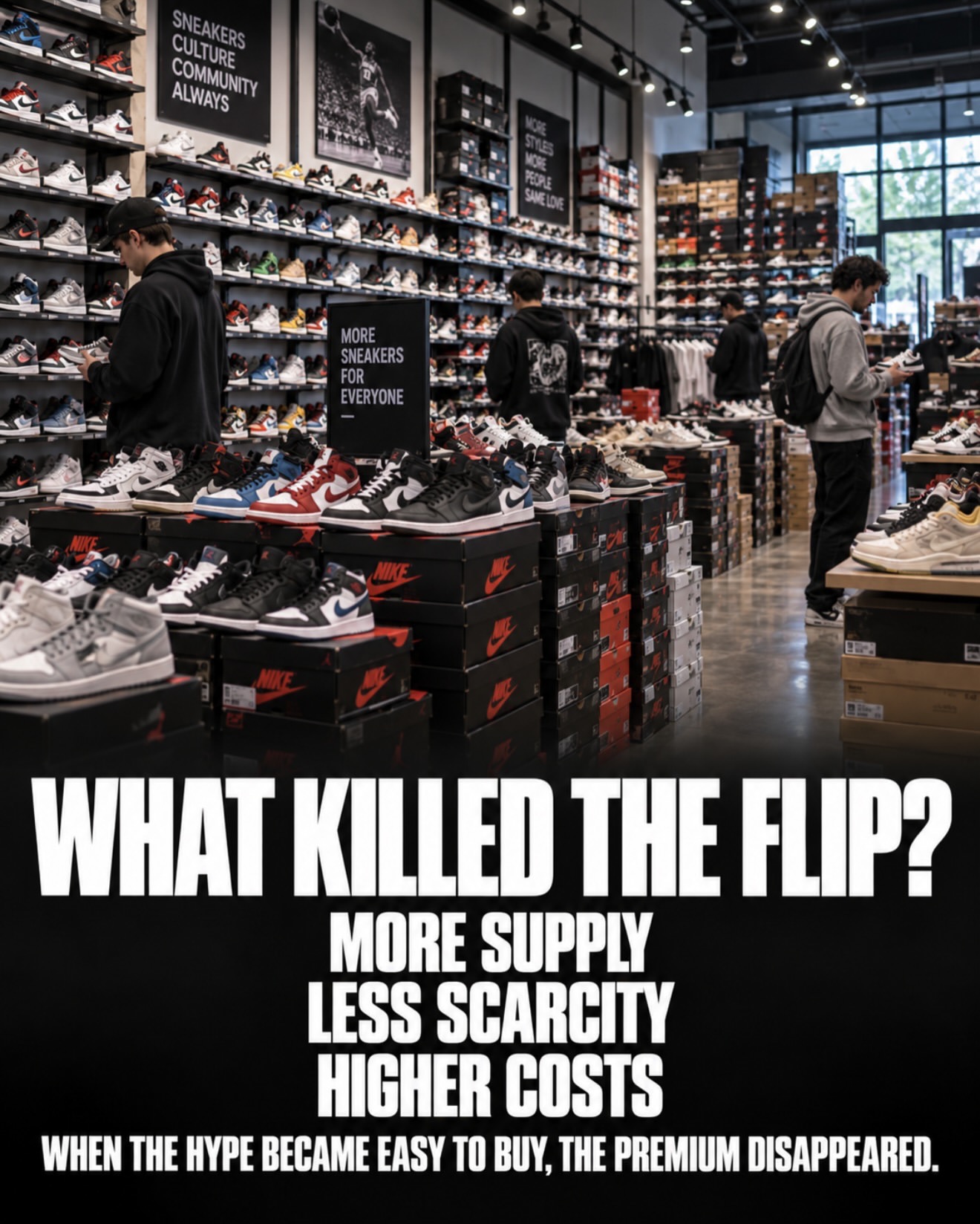
The most direct explanation is supply. When more pairs reach the market, buyers feel less pressure to pay extra. Scarcity loses its force when a release remains available instead of disappearing immediately.
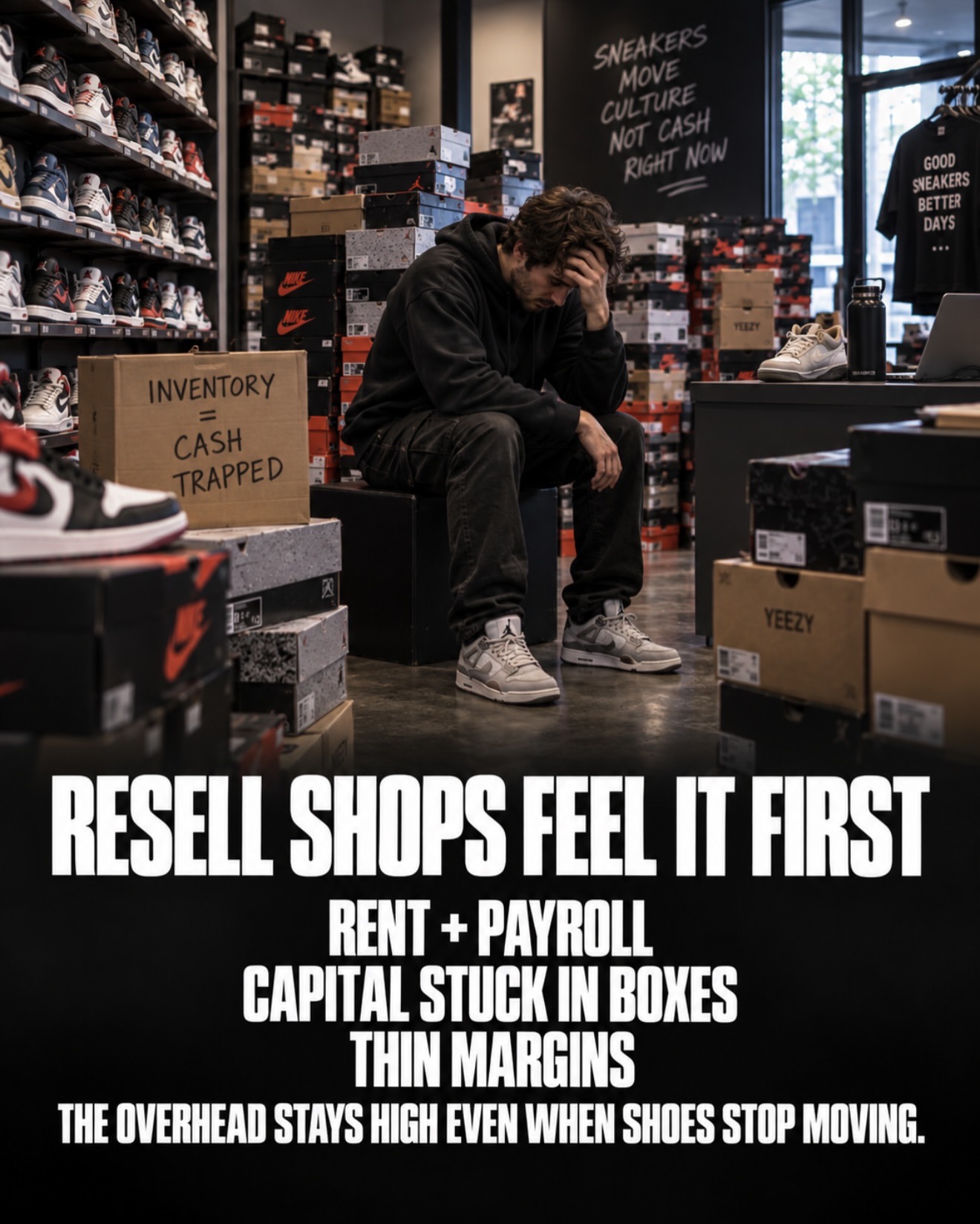
Higher operating costs add another layer of pressure for resale shops. Rent and payroll continue while inventory waits to move. When shoes stop selling quickly, sellers have capital stuck in boxes and thinner margins to work with.
Discounting can create a faster exit, but it also means accepting a loss. Examples shown with the analysis include reductions from $225 to $150, $150 to $100, $230 to $160 and $180 to $120. The products behind those examples are not identified.
Did resellers change sneaker culture—or did brands overproduce?
Resellers became a visible part of the sneaker boom because markups changed how many people approached releases. Shoes bought to wear could also be treated as commodities, with profit built into the excitement around scarcity.
But the downturn points to a broader imbalance. The analysis identifies increased supply, reduced scarcity and higher costs as key factors. Once hype became easier to buy, the premium had less room to survive.
That makes “sneakers are dead” an overstatement. The more precise conclusion is that a particular business model is weakening: the assumption that almost any hyped release can become instant profit.
What the reset means for Toronto buyers
A softer resale market gives shoppers more reason to pause before paying above retail. Some releases may become easier to find at or below their original price when demand fails to match the number of pairs available.
For sellers, the calculation is tougher. The safest inventory may no longer be the loudest release. It may be the pair with a clear audience, a sensible buy-in price and enough appeal to move without artificial scarcity.
Sneaker culture has not disappeared. Its economics have changed first—and the easy money is proving much harder to find.
Thank you for reading. This article is complete. Read more articles here | TalkofToronto.ca