
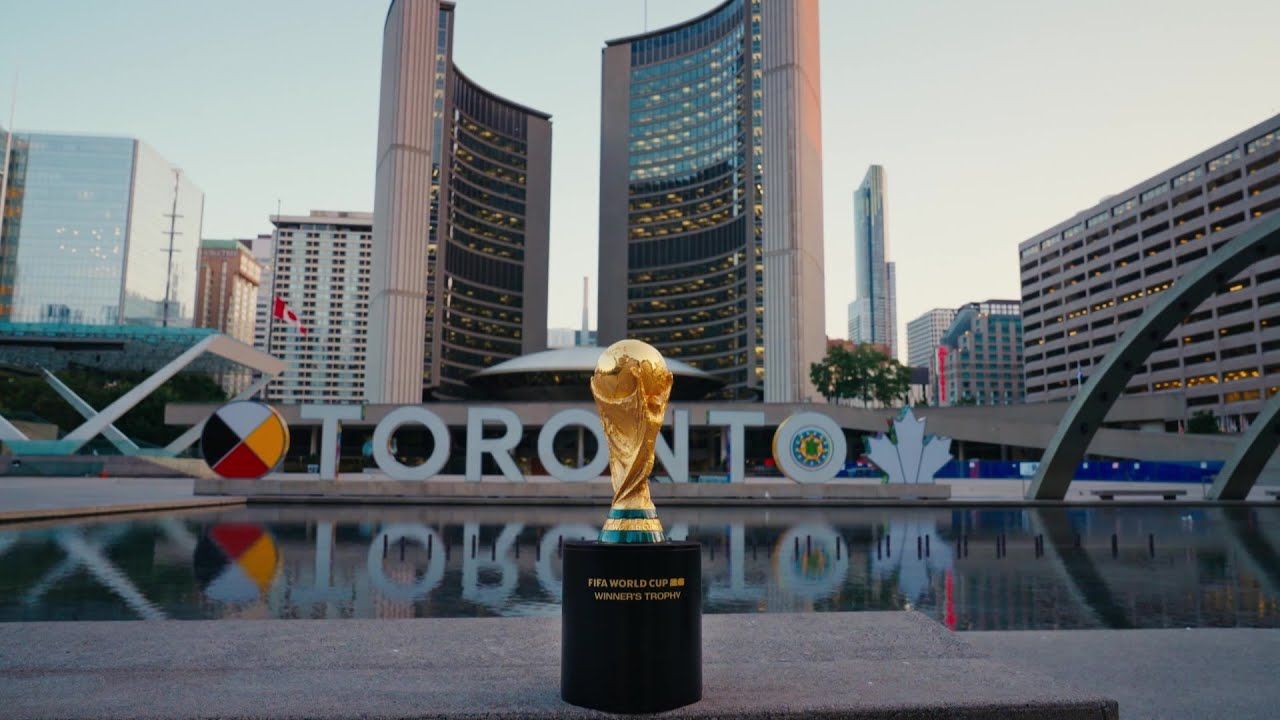
FIFA World Cup 2026 in Toronto: Inside the Six Matches That Made History at Toronto Stadium
How Canada’s biggest city became a World Cup capital — from Cyle Larin’s opening-day heroics to Cristiano Ronaldo’s emotional Exhibition Place farewell.
For 39 unforgettable days between June 11 and July 19, the eyes of the football world turned to North America for the first-ever 48-team FIFA World Cup. And for six of those matchdays, they turned to Toronto.
BMO Field — rebranded “Toronto Stadium” under FIFA’s neutral-naming rules and temporarily expanded to a capacity of roughly 45,700 — hosted five group-stage fixtures and one knockout clash at Exhibition Place. It was, by any measure, the most significant sporting stretch in the city’s history: a home nation’s World Cup debut on Canadian soil, a Bundesliga giant edging out West Africa’s finest, and one of the sport’s greatest-ever rivalries closing out its final chapter under the CN Tower’s shadow.
Here’s the definitive Toronto recap: the memorable moments, the fan favorites, the upsets, and — finally — where every one of the 48 competing nations finished, first to last.
The Moment Toronto Had Waited 36 Years For
It started on June 12 with a match no Canadian soccer fan will forget. Canada, playing its first-ever men’s World Cup match on home soil, took on Bosnia and Herzegovina in front of a raucous, red-clad crowd — with Connor McDavid and Ryan Reynolds among the celebrities soaking up the atmosphere alongside a stadium chanting “Ca-na-da!” under the lights.
Bosnia struck first through a Jovo Lukić header in the 21st minute, and Canada spent the rest of the first half pressing without reward. Then, in the 78th minute, substitute Cyle Larin — on the pitch for barely two minutes — turned home a Promise David pass to level the score. The stadium erupted. It was only Canada’s second-ever World Cup goal, and it turned a nervy afternoon into a piece of history: Canada’s first-ever point at a men’s World Cup, after going winless across their 1986 and 2022 appearances combined.
“It was special for me,” Larin said afterward. “I score when Canada needs me.” Fittingly, Canada has never lost a match in which Larin has found the net.

Fan Favorites: The Diasporas That Turned Toronto Into a World Stage
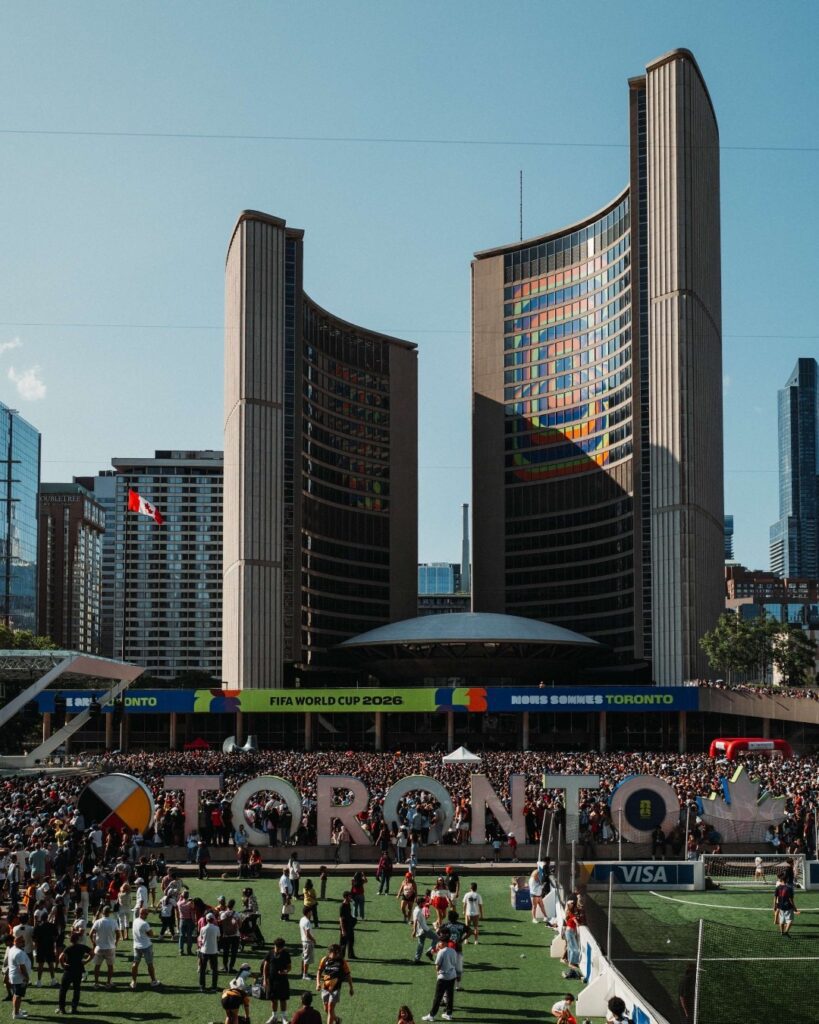
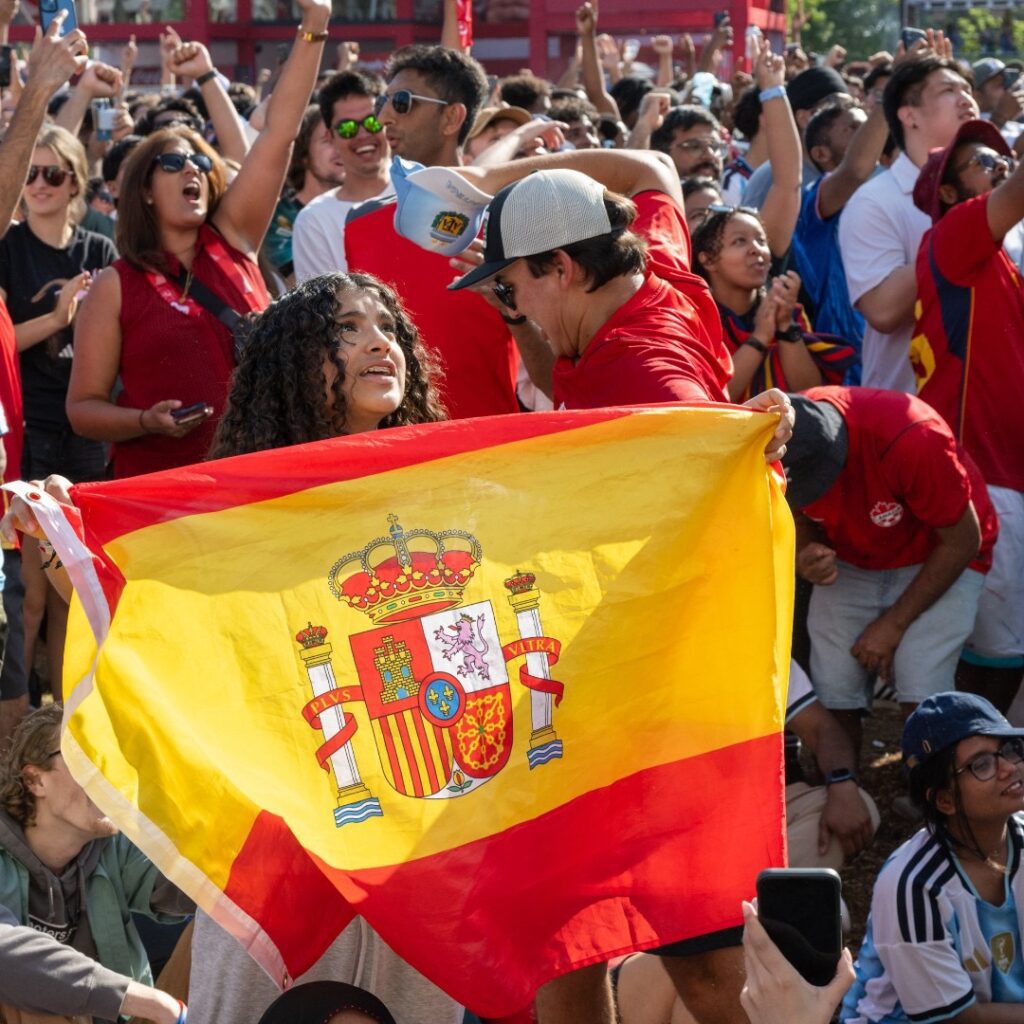
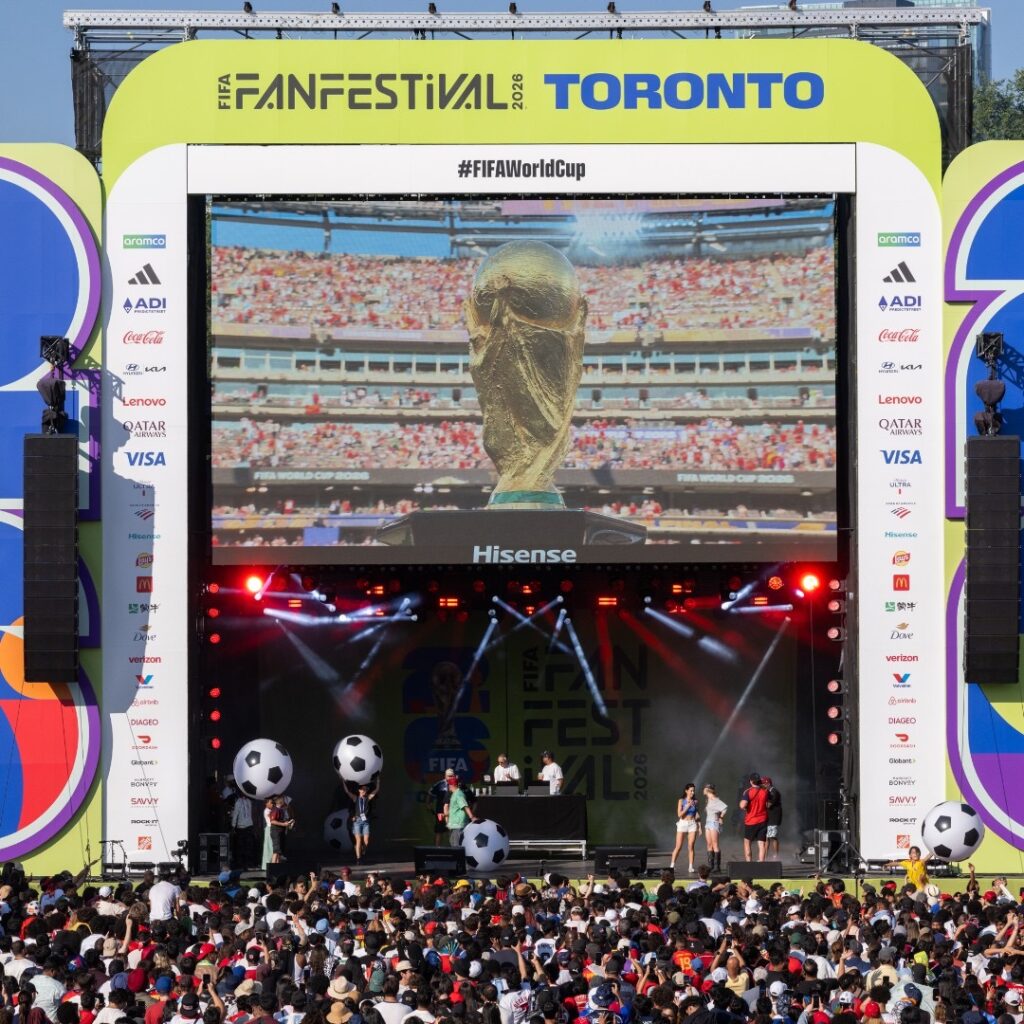
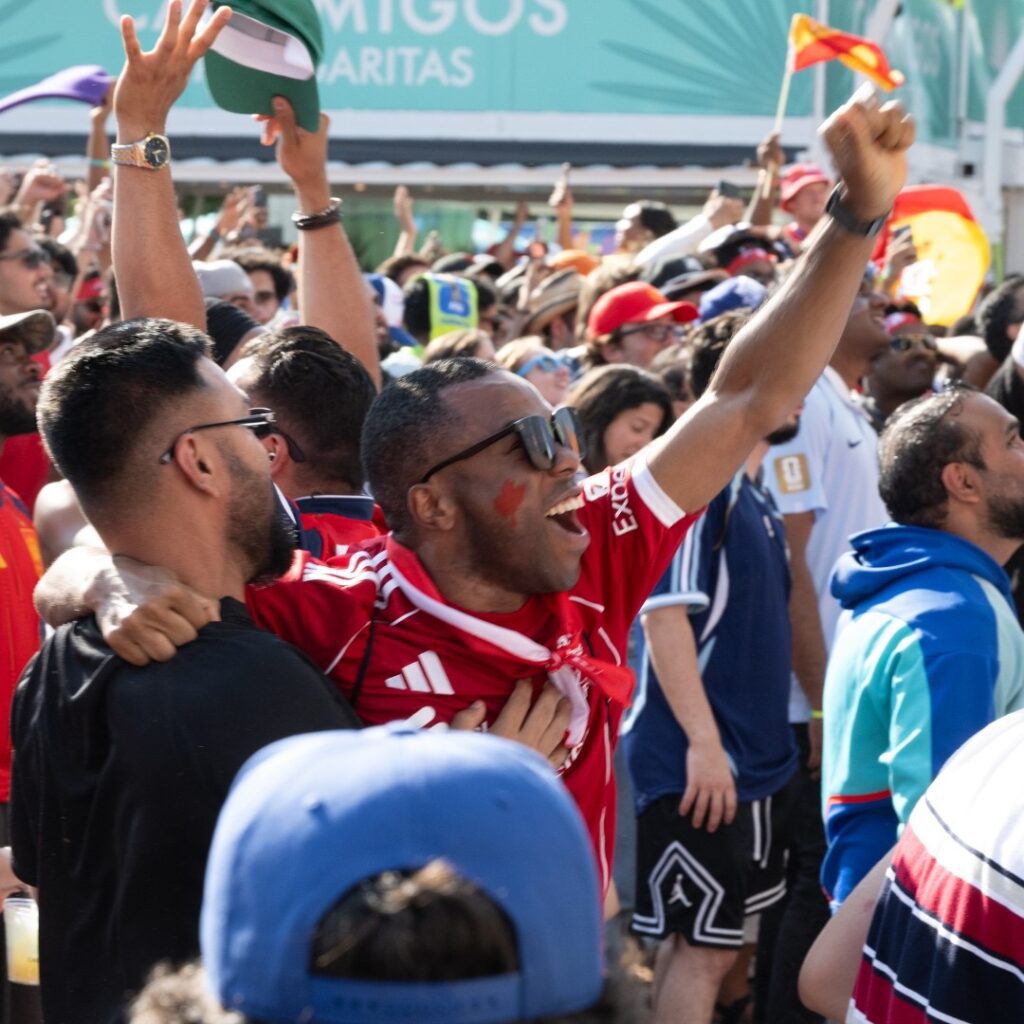
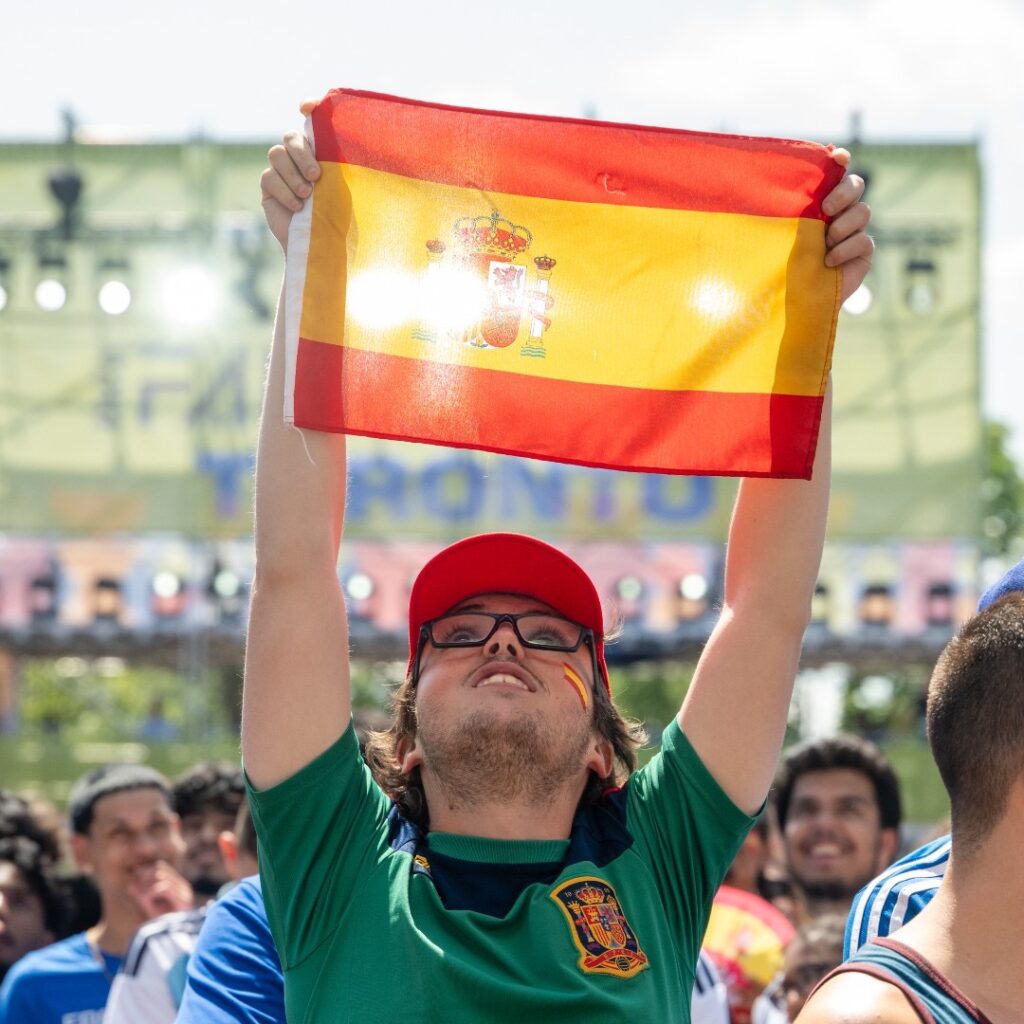
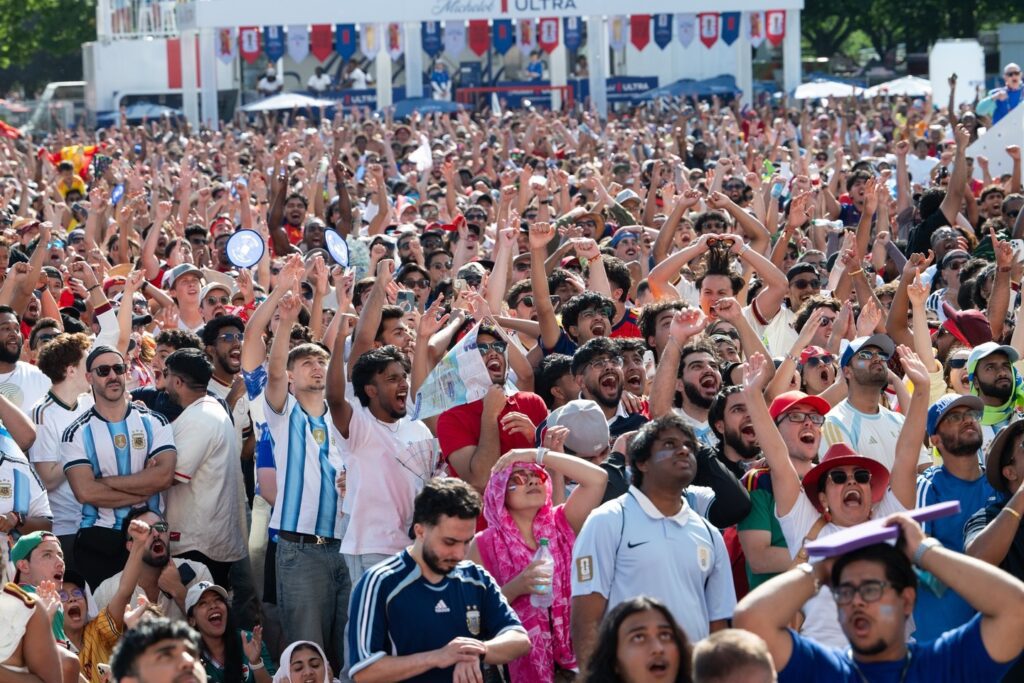
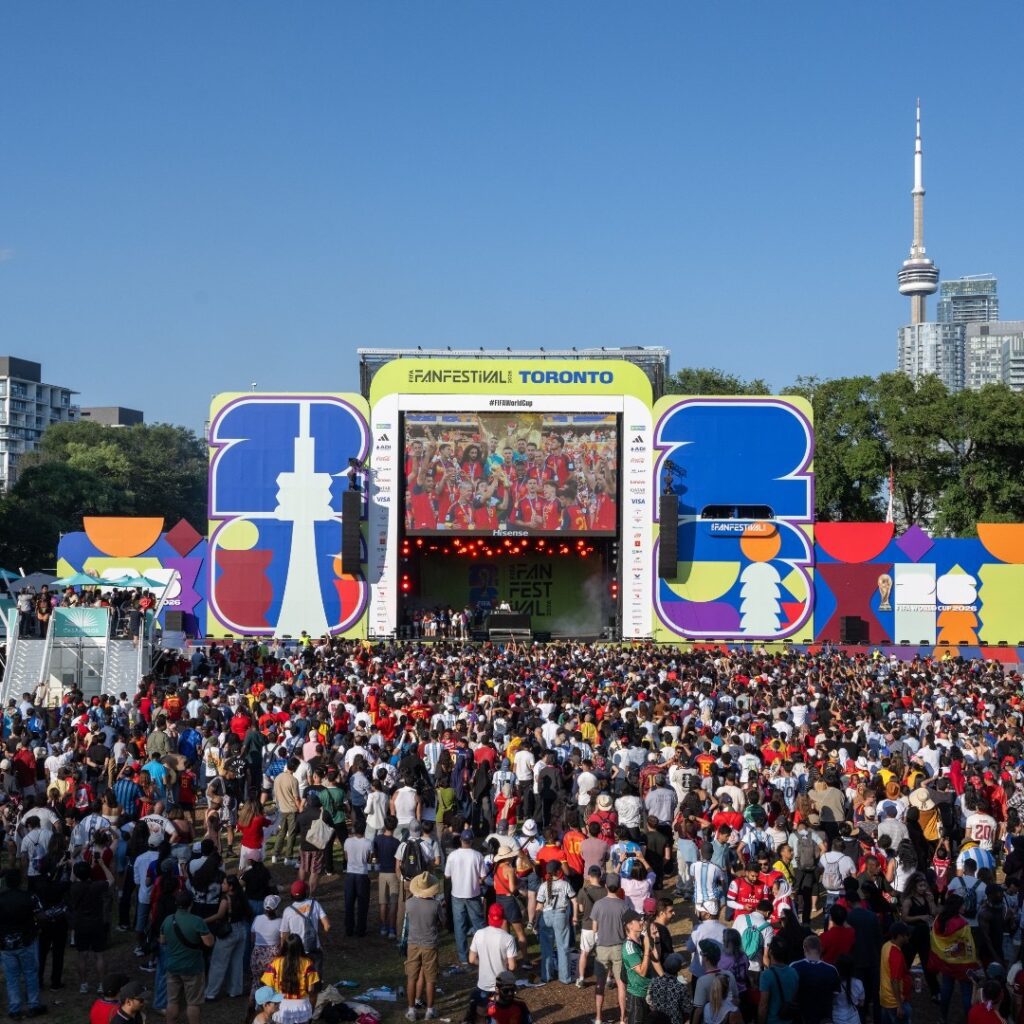
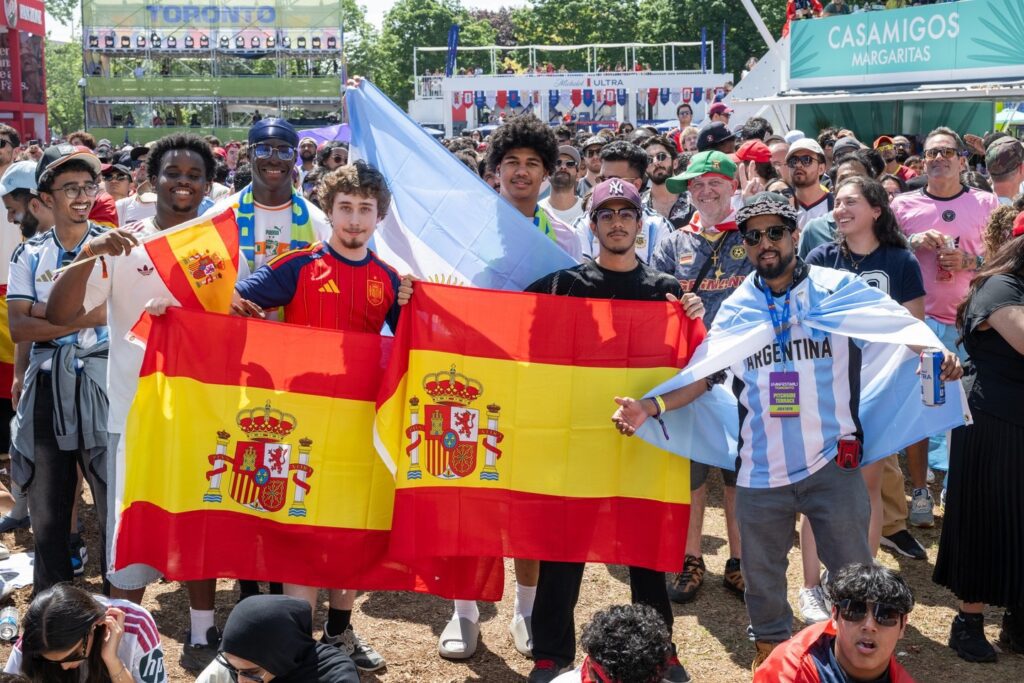
If there’s one thing Toronto proved over its six matchdays, it’s that “the world in a city” isn’t just a slogan. Each fixture brought a different wave of supporters into Exhibition Place, and the city’s multicultural neighborhoods answered the call every time.
- Canada vs. Bosnia and Herzegovina (June 12): the home crowd, unsurprisingly, but Toronto’s sizeable Bosnian community made its presence felt too, giving the opener a genuine international-derby feel.
- Ghana 1-0 Panama (June 17): West African drums and vuvuzelas from Toronto’s Ghanaian community turned an early group match into one of the loudest atmospheres of the tournament’s opening week.
- Germany 2-1 Côte d’Ivoire (June 20): a tense, error-strewn classic settled by substitute Deniz Undav’s stoppage-time brace, watched by a stadium split almost evenly down the middle.
- Senegal vs. Iraq (June 26): the Lions of Teranga’s supporters, backed by Toronto’s Senegalese and broader West African diaspora, brought some of the best pageantry of the group stage.
- Portugal 2-1 Croatia (July 2, Round of 32): the send-off. Thousands from Toronto’s Portuguese and Croatian communities packed the stands to watch Cristiano Ronaldo, 41, and Luka Modrić, 40, face off — very possibly for the last time at a World Cup.
Sponsored Ad:
The Moment That Closed the Book on Two Legends
Toronto’s final World Cup match doubled as one of the tournament’s most poignant scenes. Portugal edged Croatia 2-1 in a wild, ill-tempered Round of 32 tie that saw a stoppage-time Croatian goal chalked off by VAR in the dying seconds. Ivan Perišić had given Croatia the lead, Ronaldo equalized from the penalty spot, and Gonçalo Ramos struck the winner deep into stoppage time.
But the real story was written after the final whistle: Ronaldo and Modrić — a combined 82 years old between them, and two of the finest midfield-to-attack talents of their generation — embraced at midfield in what was almost certainly Modrić’s last World Cup appearance. It also marked the final whistle on Toronto’s tournament: six matches, one host city, and a fitting send-off for two icons.
Biggest Upsets of the Tournament
The expanded 48-team format brought chaos in the best possible way. Some of the tournament’s headline shocks:
- South Africa stun South Korea. Bafana Bafana’s 1-0 win over South Korea in Group A was one of the earliest surprises of the tournament, propelling South Africa into the Round of 32 ahead of a South Korean side many had tipped to advance comfortably.
- Cape Verde’s fairytale run. The World Cup debutants drew all three of their Group H matches — including a result against eventual champions Spain’s group — to advance on penalty-kick heroics and a wave of goodwill from neutrals everywhere.
- Turkey topple the USA. Co-hosts United States were stunned 3-2 by Turkey on the final group matchday, a result that didn’t cost the Americans top spot in Group D but rattled confidence heading into the knockout rounds — where Belgium later beat them 4-1 in the Round of 16.
- Morocco’s penalty-shootout surge. The Atlas Lions edged the Netherlands on penalties in the Round of 32, then stunned co-host Canada 3-0 in the Round of 16, before finally falling to France 2-0 in the quarterfinals — arguably the deepest run by an African nation in tournament history.
- Egypt’s shootout escape. Egypt survived a 1-1 draw with Australia in the Round of 32, advancing 4-2 on penalties in one of the tightest knockout matches of the tournament.
- The co-hosts’ collective early exit. All three host nations — Canada, Mexico, and the United States — were eliminated at the Round of 16 stage, each beaten by a European side (Morocco, England, and Belgium respectively), a storyline that dominated headlines through the tournament’s second week.
The Final: Spain Denies Argentina Back-to-Back Titles
The 2026 FIFA World Cup Final, played July 19 at MetLife Stadium in East Rutherford, New Jersey, delivered a tense, defensively dominant showpiece. Reigning champions Argentina, chasing the first repeat title in over six decades, were reduced to 10 men late in regulation after an Enzo Fernández red card. Spain — who didn’t allow a single shot on target all match — finally broke through in the 106th minute of extra time, when substitute Ferran Torres buried a spectacular backward header assist from Nico Williams.
The 1-0 win gave Spain its second World Cup title, matching their 2010 triumph, and closed the book on Lionel Messi’s bid to become the first player to lift back-to-back World Cups.
FIFA World Cup 2026: Complete Final Standings, 1st to 48th
The table below reflects each of the 48 competing nations, ranked by the stage they reached — champions down to the 16 teams eliminated in the group phase. Teams that exited at the same stage are ordered using the tournament’s own tiebreaker hierarchy (group points, then goal difference) as a guide, since FIFA does not officially rank teams within a shared elimination round beyond the podium places.
| Rank | Team | How Their Tournament Ended |
|---|---|---|
| 1 | Spain | Champions — beat Argentina 1-0 (AET) in the Final |
| 2 | Argentina | Runners-up |
| 3 | England | Third place — beat France 6-4 in the playoff |
| 4 | France | Fourth place |
| 5 | Morocco | Lost quarterfinal to France, 0-2 |
| 6 | Belgium | Lost quarterfinal to Spain, 1-2 |
| 7 | Norway | Lost quarterfinal to England, 1-2 |
| 8 | Switzerland | Lost quarterfinal to Argentina, 1-3 |
| 9 | Portugal | Lost Round of 16 to Spain, 0-1 |
| 10 | Brazil | Lost Round of 16 to Norway, 0-2 |
| 11 | Mexico | Lost Round of 16 to England, 2-3 |
| 12 | United States | Lost Round of 16 to Belgium, 1-4 |
| 13 | Egypt | Lost Round of 16 to Argentina, 2-3 |
| 14 | Colombia | Lost Round of 16 to Switzerland (0-0, PSO) |
| 15 | Canada | Lost Round of 16 to Morocco, 0-3 |
| 16 | Paraguay | Lost Round of 16 to France, 0-1 |
| 17 | Croatia | Lost Round of 32 to Portugal, 1-2 |
| 18 | Ghana | Lost Round of 32 to Colombia, 0-1 |
| 19 | Algeria | Lost Round of 32 to Switzerland, 0-2 |
| 20 | Austria | Lost Round of 32 to Spain, 0-3 |
| 21 | Cabo Verde | Lost Round of 32 to Argentina, 2-3 (AET) |
| 22 | Australia | Lost Round of 32 to Egypt (1-1, PSO) |
| 23 | Bosnia and Herzegovina | Lost Round of 32 to USA, 0-2 |
| 24 | Senegal | Lost Round of 32 to Belgium, 2-3 (AET) |
| 25 | DR Congo | Lost Round of 32 to England, 1-2 |
| 26 | Ecuador | Lost Round of 32 to Mexico, 0-2 |
| 27 | Sweden | Lost Round of 32 to France, 0-3 |
| 28 | Ivory Coast | Lost Round of 32 to Norway, 1-2 |
| 29 | Netherlands | Lost Round of 32 to Morocco (1-1, PSO) |
| 30 | Germany | Lost Round of 32 to Paraguay (1-1, PSO) |
| 31 | Japan | Lost Round of 32 to Brazil, 1-2 |
| 32 | South Africa | Lost Round of 32 to Canada, 0-1 |
| 33 | Iran | Eliminated in group stage (Group G) |
| 34 | South Korea | Eliminated in group stage (Group A) |
| 35 | Turkey | Eliminated in group stage (Group D) |
| 36 | Scotland | Eliminated in group stage (Group C) |
| 37 | Uruguay | Eliminated in group stage (Group H) |
| 38 | Saudi Arabia | Eliminated in group stage (Group H) |
| 39 | Czechia | Eliminated in group stage (Group A) |
| 40 | New Zealand | Eliminated in group stage (Group G) |
| 41 | Qatar | Eliminated in group stage (Group B) |
| 42 | Curaçao | Eliminated in group stage (Group E) |
| 43 | Panama | Eliminated in group stage (Group L) |
| 44 | Jordan | Eliminated in group stage (Group J) |
| 45 | Haiti | Eliminated in group stage (Group C) |
| 46 | Uzbekistan | Eliminated in group stage (Group K) |
| 47 | Tunisia | Eliminated in group stage (Group F) |
| 48 | Iraq | Eliminated in group stage (Group I) |
Toronto’s World Cup Legacy
When the final whistle blew on Portugal vs. Croatia on July 2, Toronto’s World Cup chapter closed — but its legacy is only beginning. Six matches, a temporarily expanded Toronto Stadium, 22 days of programming at the FIFA Fan Festival at Fort York, and a new training facility at Centennial Park all point to a city that proved, once again, it’s genuinely “the world in a city.” For long-time Toronto FC supporters and newly minted Canadian national team fans alike, June 12, 2026 will be remembered as the day the World Cup finally came home.
Sponsored Ad:
Thank you for reading. This article is complete. Read more articles here | TalkofToronto.ca